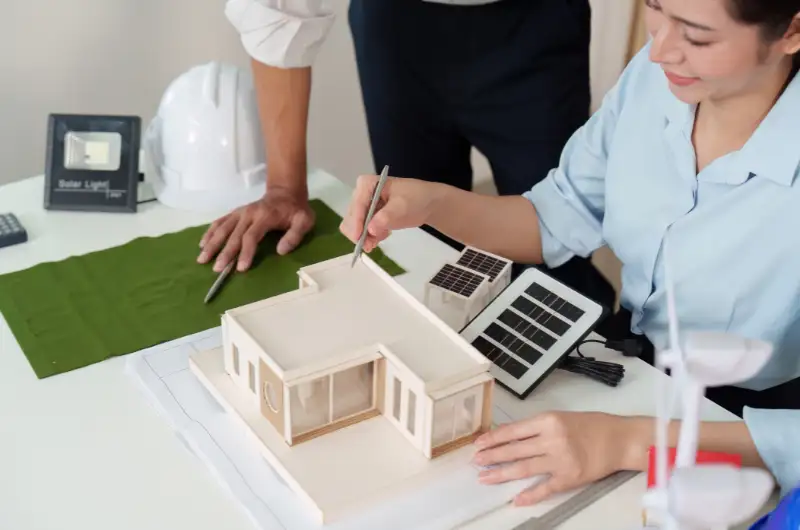
Just think you have a small plot of land. You want a cozy family home. You want it to last and not waste anything. But you worry. Will it cost too much? Can you really build a home that stays affordable over many years? Lots of families ask the same thing.
Energy bills and maintenance costs go up fast in California. Many homeowners feel stuck. High bills are stressful. But smart design can help. A recent report shows that buildings use a lot of energy around the world. Choosing wisely can cut the waste of money, energy, and materials.
What if your home stayed warm in winter and cool in summer without huge bills? What if you spent once but saved for decades? What if your small plot became a comfortable home with low bills and almost no waste?
That is what cost-effective and sustainable architecture promises. But are cost-effective architectural solutions feasible? Can they really save money and give comfort at the same time?
Let’s see how it can work. And why Full Perspective can make it real for you.
Why Choose Cost-Effective Architecture?
Why do architects and homeowners choose cost-effective architecture? Because it saves money and time over many years.
Martina Signorini and her team, in a 2025 study, found that homes planned well from the start cost much less over their whole life. They measured energy, repairs, and maintenance. The savings were big.
A house is not just walls and a roof. It lives for decades. Every choice — layout, materials, systems — changes how much money you spend later. Combining cost-effectiveness and sustainability reduces waste. You avoid surprises.
A smartly designed home uses less energy. It needs fewer repairs. It lasts longer. That means peace of mind and more savings. Full Perspective builds homes with that long view. We plan for short-term costs and long-term comfort. Cost-effective doesn’t mean cheap-looking. It means smart, thoughtful, and built to last.
What Are Budget-Friendly Building Design Methods?
How do you build a home that doesn’t burn money? These methods help.
- Use energy-efficient materials. Jia Li’s research shows that these materials cut heating and cooling costs a lot.
- Plan smart layouts. Good layout saves energy and space.
- Use efficient façades and insulation. A 2025 review of innovative technologies and sustainable strategies found that double-skin façades and similar technologies can greatly improve energy efficiency.
- Add renewable or passive systems. Think natural ventilation, sun-smart orientation, or rainwater harvesting. These reduce bills and waste over time.
A small family home with good insulation and airflow can stay cool without AC all day. Solar panels can cut electricity bills for decades.
Full Perspective applies these methods in every project. Every square foot, every material, every design choice matters. That is how we make budget-friendly homes practical and real.
How to Reduce Building Costs Smartly?
Cutting costs smartly does not mean cheap shortcuts. It means smart planning from day one.
Edoardo De Santis and Francesco Livio Rossini (2025) studied building maintenance. They found that grouping maintenance tasks reduces costs over time. Random fixes are expensive. Planned maintenance keeps homes working and avoids big repair bills.
Tip: Use durable materials and easy-to-maintain systems. Plan maintenance with a budget in mind.
Falugi et al. (2024) also found that integrated design — combining structure, energy systems, and operations — cuts 20–30% of total costs over time.
Full Perspective plans how your home lives, works, and ages. We save you money and stress. And we don’t just draw walls; we plan for life.
What Makes Architecture Cost-Effective in the Long Term?
A home stays cost-effective only if it works well for decades.
Yahya Alassaf (2024-2025) reviewed studies on energy-efficient materials and sustainable design. He found that these choices lower energy costs, maintenance costs, and waste.
Good design also saves energy and improves comfort. Proper insulation keeps rooms warm in winter and cool in summer. Smart windows and shading cut electricity use. Durable materials last longer.
If you build for the long term, you avoid the “cheap now, expensive later” trap. You build once and benefit for decades.
Full Perspective picks materials and layouts that last. We optimize systems so your home stays efficient. You won’t waste money on bills or constant repairs.
Can Efficient Design Save Maintenance Costs?
Yes. De Santis and Rossini (2025) [cited above] used BIM-based models to plan home maintenance. They grouped tasks over time. The result? Lower disruption and much lower lifetime maintenance costs.
It means no surprise repairs. No sudden bills. Just a home you can manage easily.
Efficient design uses materials that need little care. High-quality finishes. Surfaces that are easy to clean. Good ventilation to prevent moisture problems.
Building smart saves money, time, stress, and energy. Full Perspective builds homes that think ahead. We plan for comfort now — and ease later.
How to Combine Quality and Low Cost?
Many people think cheap means low quality. It does not. Smart design can give both.
Sutikno and colleagues (2025) studied green building and value engineering. They showed you can have high-quality, sustainable homes at low cost.
Here’s how:
- Use value engineering. Pick materials that are strong and affordable.
- Think long-term. Use lifecycle cost analysis to plan beyond upfront costs.
- Embrace sustainability. Green or recycled materials often pay off over time.
- Plan smart layouts. Reduce wasted space, energy, and materials.
Full Perspective balances quality and cost. Homes feel premium but don’t cost too much. They combine design, materials, and planning to make smart, lasting homes.
So, Are Cost-Effective Architectural Solutions Feasible?
Yes. When design, materials, lifecycle thinking, and maintenance planning come together, it works.
Yuan et al. (2025) did a global review on architecture and climate change. They found that sustainable, efficient design works everywhere. Homes built this way save energy, cut carbon, and cost less over time.
Your small plot home can be liveable, durable, and low-cost. No wasted materials. No wasted money. A warm, safe, long-lasting family home is possible.
Full Perspective makes this possible. We build homes that last, save, and feel good to live in.
Your Future-Ready Home Starts Here
You learned why cost-effective architecture matters. You saw methods to cut waste and bills. You saw how smart design saves money over time.
Full Perspective makes it real. We balance quality, cost, and sustainability. And we treat your home like it will last for decades — because it will.
Want a durable, affordable, beautiful home on your plot? Let Full Perspective guide you. Call today and start building smart.
FAQs
1. What makes a home cost-effective?
Smart design, energy-efficient materials, and easy maintenance save money.
2. Does cost-effective architecture lower bills?
Yes. Smart design and materials reduce energy and repair costs.
3. Is the upfront cost higher for efficient design?
Sometimes slightly. But long-term savings are much bigger.
4. Can sustainable materials reduce waste?
Yes. They last longer and need less repair.
5. Does smart design improve comfort?
Yes. Good insulation, airflow, and layout make homes comfy.
6. Is maintenance expensive?
No. Efficient design keeps maintenance simple and cheap.
7. Can small plots get cost-effective homes?
Yes. Smart planning works for small and large homes alike.
8. Is cost-effective architecture practical?
Yes. Research and real examples show it works.
9. Can I trust Full Perspective to deliver value?
Yes. We combine experience, design skills, and cost awareness for lasting results.