An ADU garage conversion in San Diego allows homeowners to turn unused garage space into a fully legal living unit that can generate rental income, increase property value, or create flexible housing for family. With San Diego’s strong housing demand and ADU-friendly policies, garage conversions remain one of the fastest ways to add an Accessory Dwelling Unit without new construction.
San Diego homeowners choose garage-to-ADU conversions because they avoid ground-up builds, reduce permitting friction, and move faster from design to occupancy. When planned correctly, an ADU garage conversion delivers strong return on investment while staying compliant with local zoning and building regulations.
This guide explains how ADU garage conversions work in San Diego, including city rules, realistic costs, timelines, and common mistakes that delay projects.
ADU Garage Conversion Rules in San Diego
San Diego follows California ADU law while applying city-specific zoning and building standards. In most residential zones, existing garages can be converted into ADUs with fewer restrictions than new construction.
Key rules that apply in San Diego include:
- No replacement parking required for converted garages
- Reduced setback requirements for existing structures
- No owner-occupancy requirement for most ADUs
- Ministerial approval process instead of discretionary review
- Faster permit timelines compared to detached ADUs
While San Diego allows garage conversions by right, projects must still meet building code, fire safety, ceiling height, and utility standards. Early design review helps avoid delays during permitting.
The Garage-to-ADU Opportunity—Why Now?
California’s housing crisis is real. Families are squeezed into minimal space. Privacy is non-existent. Young adults can’t afford to move out. Aging parents need affordable care nearby. Meanwhile, land is scarce, and construction costs are touching the sky.
That’s where the attached ADU garage conversion comes in. It’s a practical solution to an impossible situation.
Unlike building everything from scratch, a conversion uses an existing structure. The foundation is set. The roof keeps the rain away. And painted walls already separate you from the street.
You’re not paying to create a footprint; you’re repurposing an existing one. That changes the math entirely.
The conversion keeps the original garage’s walls and foundation, saving massive costs, but completely reimagines the interior. New electrical systems. Plumbing and drainage. Insulation and climate control. Flooring and finishes.
The result? A dwelling unit that functions independently from your main home, but sits on your property, generating additional income you never thought you had.
2-car garage ADU conversion—Is It Even Legal?
State law now encourages garage conversion. California’s ADU regulations have opened doors (literally and figuratively) for homeowners to convert garages into legal dwelling units. It’s no longer a gray-area project. You can legally convert your garage into additional living space and generate rental income.
However, some standards need to be met. For example, California law states that ADUs in residential areas can be detached up to 1,200 square feet or attached and no larger than half the size of the main house.
The Real-World Benefits (Beyond the Obvious)
Yes, extra space is nice. Additional income is nice. But the benefits go far beyond that.
- Independent living without the awkwardness. Your parent has their own entrance, bathroom, and kitchen. You have yours. You’re close enough to help, far enough to maintain independence. Everyone wins.
- Your teenager gets their own space. They want independence without leaving. A converted garage gives it to them. They learn responsibility. You maintain privacy. It works.
- Rental income that actually covers costs. In San Diego County, an ADU typically rents for $1,200-$2,000 per month. But the costs can vary depending on several factors. Over a few years, the garage conversion ADU cost pays for itself and then becomes ongoing passive income.
- Your home’s value increases. A legal ADU adds value to your property. Buyers see it as potential income, extra family space, or both. You’re not just earning back your conversion cost—you’re building equity.
- You control what happens next. Conversion today, rental tomorrow, family use later. As your needs change, so does the unit’s purpose. It’s flexible in a way that most home improvements aren’t.
- You keep the life you’ve built. You don’t move to a new neighborhood. Your kids stay in the same schools. Your community remains the same. You’re just making smarter use of the property you already love.
ADU Garage Conversion Cost in San Diego
Most homeowners want clear numbers before moving forward.
Typical garage to ADU conversion cost in San Diego:
- Low range: $65,000 – $85,000
- Average range: $95,000 – $135,000
- High-end builds: $150,000+
Costs depend on garage condition, plumbing distance, electrical capacity, fire separation requirements, and interior finishes. Because the structure already exists, garage conversions usually cost less than detached ADUs.
What Does a Garage Conversion Actually Involve?
The process isn’t complicated, but it’s detailed. Here’s what happens.
Assessment and Design.
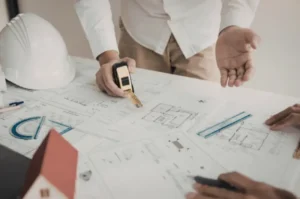
At Full Perspective, we first evaluate your garage. Our experts analyze the size, structure, and site conditions. From there, we make an ADU garage conversion plan. Based on what you want, we decide where the utilities will go and how the layout will work.
Our goal is simple—create a design that maximizes your space while meeting all legal requirements.
Permitting.
A permit allows you to get insured and rent your unit. The permitting process isn’t fun, but it’s straightforward—especially in California.
You submit the design. The city reviews it for code compliance. Then approval (or back-and-forth questions until approval).
Permit processing is easier when you have someone like us on your side. Well-designed ADU garage conversion plans reduce permit delays and construction surprises. We know the local regulations inside out. We handle submissions, respond to city requests, and coordinate all inspections for you.
Structural and MEP Design.
Electrical, plumbing, HVAC—it all needs to work together efficiently and legally. Everything has to meet current code, which is more rigorous than when your garage was built.
Full Perspective combines architectural design with structural engineering expertise, meaning your electrical, plumbing, and mechanical systems are engineered right from the start, not added as an afterthought.
Construction.
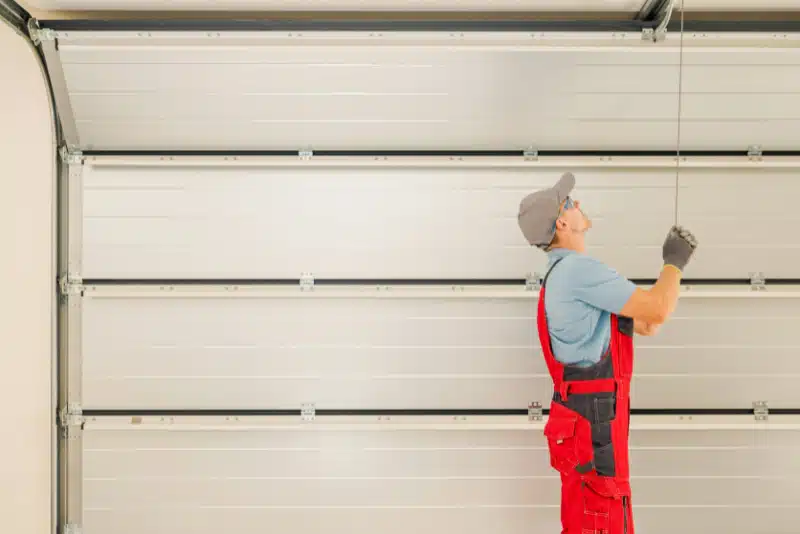
Workers remove the garage door. The interior is modified depending on what stays. New walls, flooring, and systems get installed. Permits are pulled for plumbing, electrical, and framing inspections. Final finishes go in. The city does a final inspection.
Occupancy.
Once approved, your ADU is ready. Whether you want to rent it or use it yourself, that’s your choice.
Common ADU Garage Conversion Mistakes in San Diego
Many garage conversion projects stall because of avoidable mistakes.
- Assuming all garages qualify without checking structure
- Ignoring San Diego zoning overlays and coastal rules
- Underestimating utility and electrical upgrades
- Missing fire separation and insulation requirements
- Designing layouts without rental usability in mind
Avoiding these mistakes saves months of delays and unexpected costs.
ADU Garage Conversion—Timeline
Impatient? Fair. Here’s how long it takes Full Perspective to convert your garage into a livable unit.
The first two weeks are usually spent on site assessment, budgeting, and initial construction.
Weeks 3 to 8 are the design phase. Architectural drawings, MEP plans, and permitting documents are prepared.
Weeks 9 to 14 involve permit applications and reviews. The city asks questions, you answer.
Weeks 15 to 24 are when the actual construction begins.
By week 24, you’ll have a certificate of occupancy in your hand.
Why a Garage Conversion Beats Other Options
Before diving into a garage conversion, you need to see why it’s better than the alternatives.
Option 1—Building a new ADU from scratch
You’re looking at 12-24 months of construction, foundation work, and building from the ground up. The cost is often $150,000-$300,000 or more.
A garage conversion takes 3 to 6 months with significantly lower costs since you’re working with what exists.
Option 2—Adding a second story
Sure, you could build upward. But now you’re dealing with structural upgrades, new roofing, and complex permits. A conversion is a much more efficient process.
Option 3—Renting out a bedroom
It means sharing utilities and parking with renters who live in your main house. And you can forget privacy. Are you ready for that?
A garage conversion is essentially a separate unit with separate utilities and a separate entrance. Simple and legal.
Option 4—Moving to a larger property
With California prices, that’s not realistic for most families. Why sell when you can expand what you already own?
A garage conversion is the middle ground between not expanding your home at all and building full new additions.
One Last Thing—Is an ADU Garage Conversion Right for Your Property?
Not every garage is a good conversion candidate.
Good indicators:
- Your garage is at least 400-500 square feet.
- It has direct site access (can have a separate entrance).
- Local zoning allows ADUs.
- Your property can handle an additional dwelling unit (parking, utilities).
- You’re okay with sharing your lot with a separate household.
Red flags:
- Severe structural issues requiring major repair.
- Local restrictions against ADUs (rare in California now, but possible).
- Your garage is too small or oddly shaped.
- Septic systems or other complications.
Before falling in love with the idea, get a professional assessment.
Full Perspective can look at your space, check local requirements for your specific city, and tell you honestly whether a conversion makes sense for your property and goals.
Your Garage Conversion is One Conversation Away
Your garage is sitting there. Empty. Taking up space that could change your life.
Whether you need space for family or income to help with your mortgage, an ADU garage conversion is a practical and legal solution.
It’s not a quick weekend task. But it’s not an overwhelming project either. It’s a straightforward process with clear steps and local expertise available to deliver real results.
Full Perspective specializes in adu garage conversions near San Diego that work. We know the process, the regulations, and how to make it happen smoothly.
Want to know if your garage can be converted into an ADU? Start with a conversation. Let’s see what your garage is really worth.
FAQs: Your Adu Garage Conversion Questions Answered
1. How much does an attached garage ADU conversion cost?
Garage conversion ADU cost typically ranges from $50,000-$120,000, depending on several factors, including size and site conditions. It costs far less than new construction.
2. Can I rent out my converted garage ADU?
Yes. Once permitted and approved, it’s a legal dwelling unit that can be leased to tenants with standard lease agreements. You can generate a steady income with your converted garage ADU.
3. How much does an ADU garage conversion cost in San Diego?
Most projects range between $65,000 and $135,000 depending on upgrades and garage condition.
4. Is a garage-to-ADU conversion legal in San Diego?
Yes. San Diego allows garage conversions under state ADU law with city compliance.
5. How long does an ADU garage conversion take?
Most projects take 3–6 months from permit approval to completion.
6. Can I convert a 2-car garage into an ADU?
Yes. Single and two-car garages qualify if safety and zoning standards are met.
7. Do I need to replace parking after converting my garage?
No. San Diego does not require replacement parking for ADU garage conversions.
8. What if my garage is too small?
Most residential garages (400-600 sq ft) work fine for a small ADU. Our experts can assess if your garage qualifies. They can maximize space with innovative and efficient design.
9. How long does the whole process take?
ADU garage conversion plans include a clear timeline. From consultation to occupancy, you can expect 5 to 6 months. Permits vary by city, but most processes are faster than traditional home additions.
10. Do I need permits for a garage conversion?
Yes. Permits for garage conversion are essential, not optional. Permits protect you legally, ensure code compliance, and make the unit insurable.
11. What happens to my main home during the garage conversion?
Your main home remains accessible and intact. Construction is mostly contained in the garage. Normal construction disruptions can occur.
12. What are the benefits of a garage conversion?
Garage conversions can effectively utilize the existing space of a property with minimal disruptions and low cost compared to many home improvement projects. You can also generate additional income by converting your garage into a rental unit.